
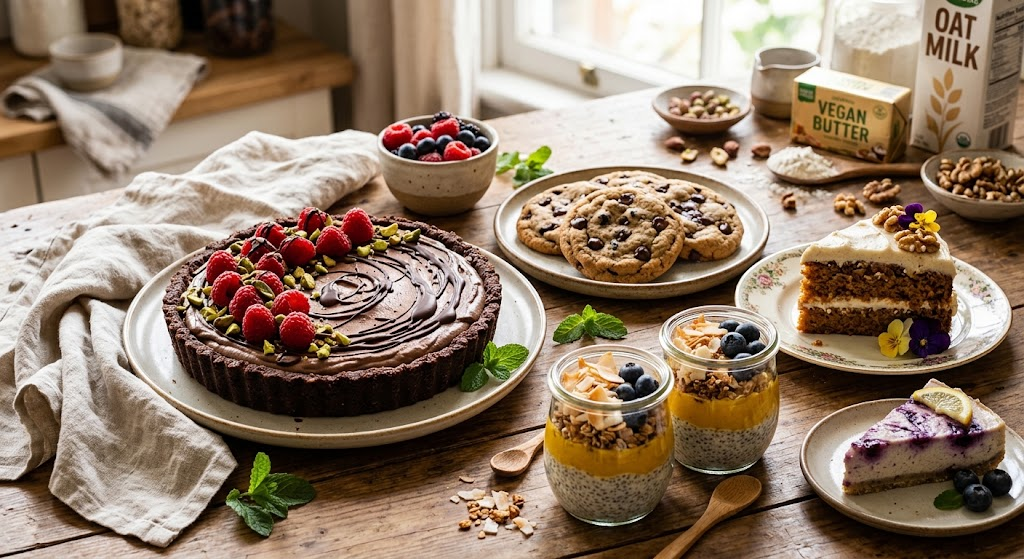
Plant-based baking offers a variety of ways to prepare delicious desserts without traditional dairy products or eggs. From vegan cakes and cookies to creamy puddings and pastries, suitable ingredient substitutions can help maintain flavor, texture and structure. Understanding how these alternatives behave makes it easier to adapt sweet recipes while meeting different dietary preferences. 🌱
Plant-Based Alternatives to Butter in Baking 🧈
Vegan Butter and Vegetable Oils 🫒
Vegan butter is one of the most direct alternatives to dairy butter. Often made with plant oils, it can provide a similar richness and consistency, making it suitable for cakes, cookies, frostings and some pastry recipes. Products differ in water content and firmness, so choosing one designed for baking can improve results.
Vegetable oils, including sunflower and canola oil, add moisture to cakes and muffins. Because they remain liquid at room temperature, they may produce softer textures but cannot always replicate butter’s ability to trap air during creaming. Recipes may therefore need adjustments to achieve the desired structure.
Fruit-Based Butter Substitutes 🍎
Mashed bananas and unsweetened applesauce can replace some of the fat in selected recipes. Bananas add sweetness and a distinctive flavor, while applesauce contributes moisture with a milder taste. These options are often useful in muffins, quick breads and moist cakes.
However, fruit purées contain water and do not behave like solid fats. Using them as a complete replacement can make cookies cakier or alter the texture of delicate pastries. Partial substitutions are often more reliable when the original recipe depends on butter for structure.
Dairy-Free Alternatives to Cream in Sweet Treats 🥥
Cream provides richness, smoothness and sometimes the volume needed for whipped toppings. Plant-based replacements vary in fat content, flavor and ability to hold air, so the best choice depends on whether the dessert requires a pourable ingredient, a thick filling or a stable topping.
Coconut Cream and Plant-Based Creams 🥥
Coconut cream is a rich option for dairy-free ganache, chilled desserts and creamy fillings. Its high fat content can produce a smooth consistency, although its coconut flavor may influence the final dessert. Chilling the product can help separate the thicker portion from the liquid.
Commercial vegan whipping creams made from plant oils or other plant ingredients are designed for desserts requiring a whipped texture. Their performance depends on formulation, temperature and preparation instructions. Some hold their shape well for decorating, while others are better suited to sauces or fillings.
Nut and Oat-Based Cream Alternatives 🌰
Cashew cream, prepared from blended cashews and water, can create a smooth base for dessert sauces, cheesecakes and puddings. Its neutral, slightly nutty flavor works well with chocolate, vanilla and fruit. It is not suitable for people with relevant nut allergies.
Oat-based creams offer another option for creamy desserts and sauces. Their thickness and fat content vary, and many do not whip like dairy cream. Checking whether a product is intended for whipping, cooking or pouring helps prevent disappointing results.
Egg Replacements for Vegan Cakes and Cookies 🥚
Eggs help bind ingredients, retain moisture, incorporate air and provide structure. No single replacement performs all these functions equally well. Selecting an alternative according to the recipe’s needs is therefore more effective than using the same substitute for every dessert.
Flaxseed and Chia Seed Eggs 🌾
A flax egg is typically prepared by mixing ground flaxseed with water and allowing the mixture to thicken. Ground chia seeds can be used similarly. Both create a gel that helps bind ingredients in cookies, brownies and denser cakes.
These substitutes contribute moisture and binding rather than the aeration provided by whipped eggs. They are consequently less suitable for delicate sponge cakes that rely heavily on eggs for volume.
Aquafaba and Fruit Purées 🍓
Aquafaba, the liquid from cooked chickpeas or canned chickpeas, can be whipped into foam and used in recipes such as vegan meringues, mousses and certain light desserts. Results depend on its concentration, preparation and the other ingredients in the recipe.
Mashed banana and applesauce can also replace eggs in some muffins and moist cakes. They help bind ingredients but may add flavor and density. For recipes requiring substantial lift, a carefully formulated egg-free baking recipe generally provides more predictable results.
Choosing the Right Plant-Based Baking Ingredients 📝
Successful substitutions depend on the dessert’s texture, flavor and structure. Before adapting a recipe, identify the function of the ingredient being replaced and choose a substitute that performs a similar role.
| Ingredient | Plant-Based Alternative | Common Uses |
|---|---|---|
| Butter 🧈 | Vegan butter or vegetable oil | Cookies, cakes and frostings |
| Cream 🥥 | Coconut cream or vegan whipping cream | Ganache, fillings and toppings |
| Eggs 🌱 | Flax eggs or chia eggs | Cookies and dense cakes |
| Eggs ☁️ | Aquafaba | Meringues and mousses |
Consider these practical points when selecting ingredients:
-
Flavor: Choose substitutes that complement chocolate, fruit, vanilla or other dessert ingredients.
-
Texture: Account for differences in moisture, fat content and binding properties.
-
Dietary needs: Check labels for allergens and ingredients that may not suit every plant-based diet.
-
Recipe compatibility: Use substitutions appropriate to the dessert rather than assuming every ingredient works universally.
For more reliable results, follow recipes developed specifically for plant-based baking or consult experienced bakers who specialize in vegan desserts. With the right ingredients and techniques, plant-based sweet treats can deliver appealing flavors, satisfying textures and plenty of variety. 🌿✨